Friends School Haverford Kindergarten


Wednesday, March 23, 2011

In Our Hands: Knowing a Garden


Under cloudy skies, once again layered in heavy coats and fleece, we unpacked the wheelbarrows, garden gloves, rain boots, and rakes to clean out the leftovers of last year's Salsa Garden. From our garden we pulled oak leaves, dried-up tomato and pepper plants, rotting wooden garden stakes, basil stems and oregano trunks, and plastic plant markers. We noticed tiny green leaves in one corner and tall, 5 inch slender leaves in a clump by the small stone wall.
One vine-like plant on a trellis in the middle of our garden caught our attention with its twisty twiggy branches and reddish green leaves. We found the stem of our jack-o-lantern in the bed of mint tea where the pumpkin had rotted away over the winter. We noticed how soft the misty rain made the bare ground overnight. Before long we had bagged one bag of yard waste and hauled two loads of stems and leaves to the leaf compost bin and had worked up quite an appetite for our morning snack of freshly popped popcorn and veggies and dip!

Following an inspiring story called Our Community Garden, we recorded our own ideas about gardens in drawings and in small groups worked with Teacher Pam to record everything that we already know about gardens. Her questions really got us thinking. Here's a record of our conversation and brainstorming:

We know...There are books about gardens. You can eat food that comes from gardens. You can plant flowers to make a garden. Peppers, tomatoes, and peppermint were growing in our garden. You can have picnics in gardens. What you need to make a garden is a shovel, seeds, watering can, sun, rake, hose, and rain. Or, we could get a cup of water from our drinking fountain for our garden. Gardeners work in gardens. So do kids and their moms and dads. Farmers plant stuff and work in gardens and on the farm. Birds and wind carry seeds. You can get seeds from flowers. We plant gardens to have food, and to provide food for animals, bees, and butterflies. We plant gardens for their beauty. Some flowers are edible; some leaves are edible. Jack Frost could freeze a garden.

We also know...To plant a sunflower you poke a hole into dirt with your finger. You put a seed in. It grows into loops and the seed pops off. Then you get leaves. Then you get a sunflower. Loosening up dirt is important. You have to put a seed inside, water it, and let it grow. Seeds need water. Longwood Gardens has 600,000 plants. There are vegetable gardens, flower gardens, spice gardens, salsa gardens, and butterfly gardens. Squirrels like gardens. You can dig holes in gardens. Many gardens have rows. Sometimes gardeners have signs to let you know what is growing there. Bananas, plums,fruit, apples, and pears grow in orchards.

What lies ahead for our kinder-gardeners in April when we return from spring break? As we turn the soil and trek back and forth with peat pots to the greenhouse in weeks to come, emerging questions will become the foundation for our spring gardening service learning project. We will engage with non-fiction and fiction and daily hands-on learning as we work to answer our questions. Please stay tuned for updates in the weeks to come!

Monday, February 14, 2011

Kindergarten presents: storytelling in Fairyland!


I have witnessed oodles of imaginative designs in the hands of five and six year olds over the past eighteen years as kindergartners brainstormed ideas (often propelled by favorite stories read in class or thematic connections) for our pretend play area. Pretend play, widely popular with our inventive, resourceful, and imaginative kindergarten classes, engages children in deeply meaningful and rich language experiences.

A fairyland has emerged where once stood the ever-popular Secret Agent Underground Lab. Hand-made vines, turrets, curtains, mobiles, murals, silk flowers, tree stump tables, magic beans, glass jewels, seashell plates, rocks and sticks for a campfire, chimes, paper crowns, and gems have replaced the gently-used cell phones, clipboards, pens and pencils, sunglasses, play money, hats and suits, binoculars, and magnifying lenses of the previous pretend play prop boxes. One day a princess found treasure: hand-drawn $110 bills on green paper "magically appeared," she said. Another day pets came to play in fairyland and enjoyed the bean soup simmering on the campfire. Often I find children dressing in long brightly covered scarves, exchanging ideas in front of the mirror: "Let's pretend that..." says one. "Ok and then how about we pretend that..." replies the other. A few children have already begun dreaming about re-creating our indoor Fairyland outdoors in the the spring time.

A few photos from the creation of Fairyland follow:


Saturday, February 5, 2011

Kindergarten's symbolic migration, fall 2010


One day in kindergarten when the sun shone warmly and clouds rolled back to reveal blue skies, we knew it was time to go. With winged headbands bouncing as we walked, we made the journey by foot to the Haverford College climbing tree, bare-branched Osage orange tree that has for decades been a favorite destination for children at FSH. This particular tree, unlike others in the area, beckons children to test their climbing skills like no other. with root-like branches twisting and turning within reach, children take to it with great enthusiasm. See more photos from our day in the slideshow sidebar!

On this particular day, the tree was our Mexico. Children alighted on the branches with smiles, draping their bodies over the branches and trunks, sighing with delight. When they had rested, they climbed about, stretching the limits of their physical bodies while sharing strategies and cheering one another on. Our monarchs found nectar and water too in this their symbolic Mexican winter home. We shared a morning snack of fresh fruit salad, water, and juice boxes (which we enjoyed with our proboscises, our straw-like tongues).

Kindergarten joined the symbolic monarch migration this fall, a project sponsored by Journey North, A Global Study of Wildlife Migration and Seasonal Change. We made paper butterflies and attached notes pf friendship to students who live in the butterfly sanctuaries in central Mexico. Our paper butterflies and letters traveled thousands of miles to their winter home along with the live butterflies that we had tagged in our classroom this fall. We will be using this site this spring to follow the northward journey of the monarchs to our schoolyard garden.


Wednesday, February 2, 2011

Looking Back...our tagged Monarchs take flight!

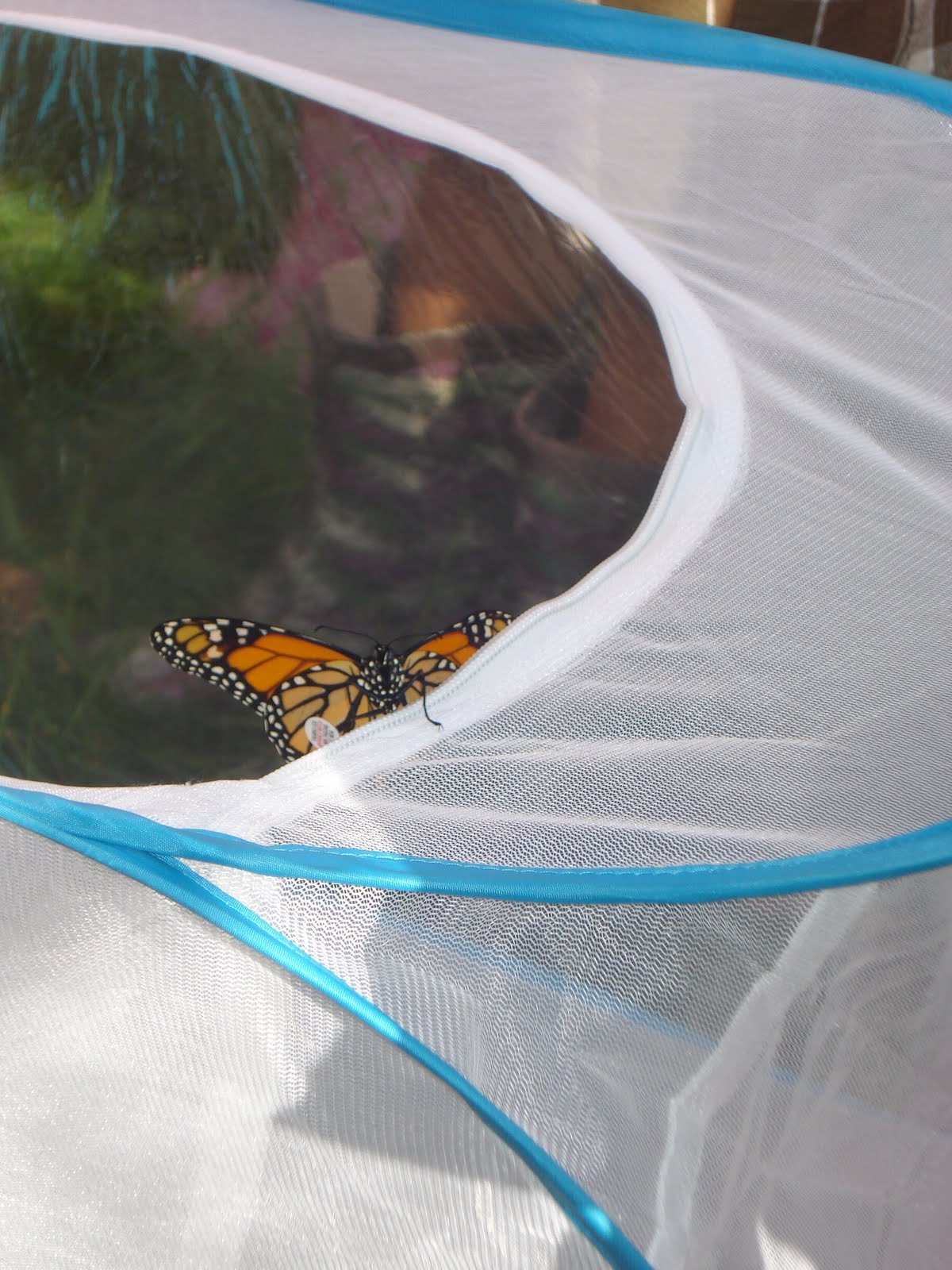
With tracking tags purchased from Monarch Watch, a program developed by the University of Kansas, the kindergartners tagged their butterflies before releasing them outdoors. Together we learned how to adhere the tags (tiny, numbered stickers) to the hindwings of the butterflies and recorded information about each butterfly (sex, origin, location) on our data sheet.

With reports from individuals who find the tagged butterflies along the migration route researchers gain insight about the southward migration of Monarchs through the mid-west, along the Eastern coast of United States, across the Gulf states, and over the border on their journey to the oyamel forests in the mountainous region of Central Mexico.


On our campus we have a special wildlife habitat garden that has been certified as a Monarch Waystation with Monarch Watch. Affectionately it is known on campus as The Puddle as not only does this wild space provide nectar and host plants for Monarch butterflies, it features a small pond with solar-powered fountain and serves as a rain garden during times of heavy rain and snowfall. We release our monarchs in this beautiful area every fall.


Saturday, January 29, 2011

Looking Back...the cats, the chrysalides, and the winged wonders!


Tiny insects, some in striped pajamas and suction cup slippers and others in scaled wings and delicate spiraled tongues welcomed the kindergartners to Friends School Haverford this past fall. Still others, in the the mysterious universes of their lime green sleeping bags, hung quietly from tiny silk buttons where moments before, a caterpillar had split it's skin for one last time, and waited quietly for the warm morning sun when a child happened by and noticed something special happening.

Kindergarten fell in love with the monarchs, just as they always do. I was once again, right there with them.

The story in photos continues..